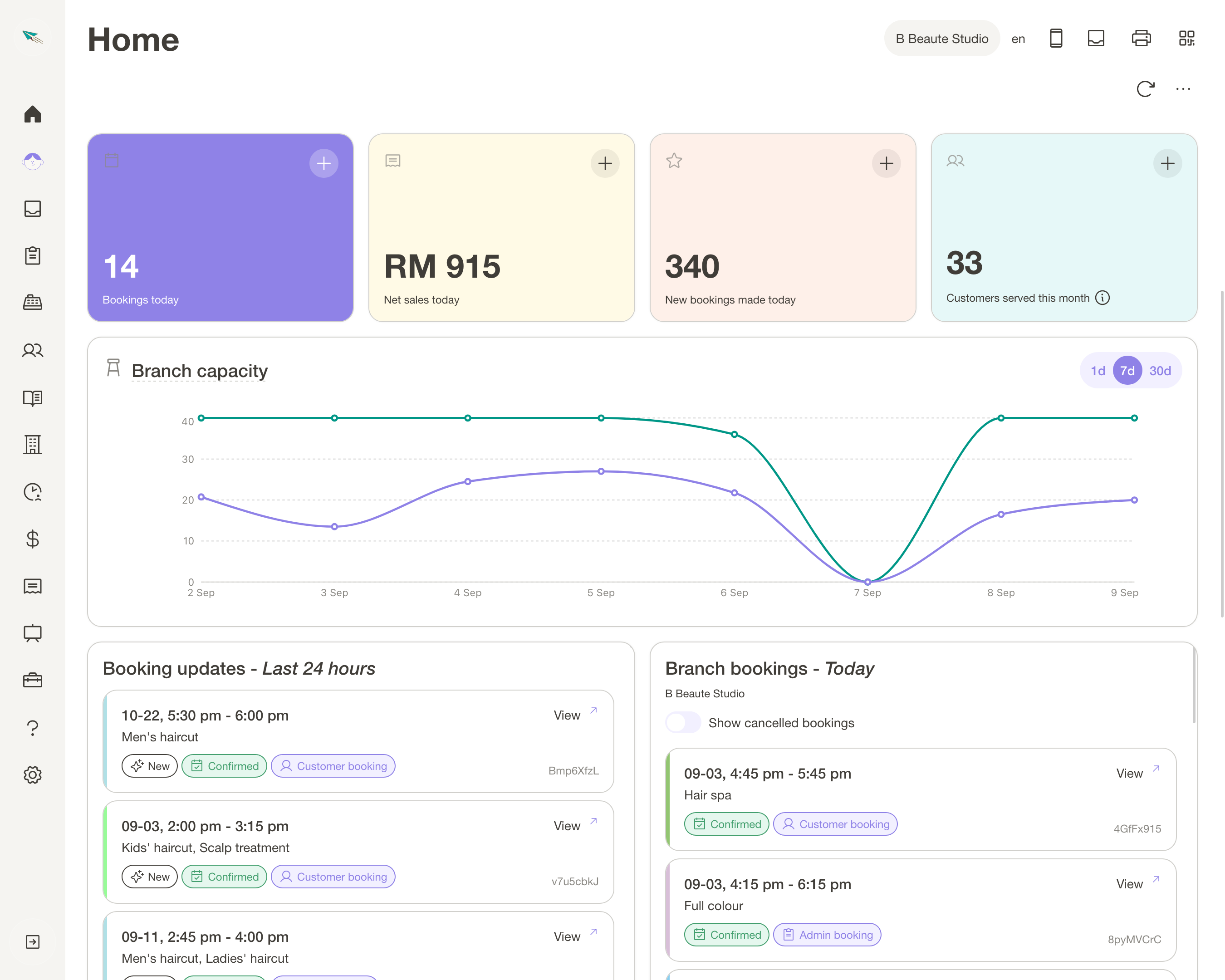
Soalan ini hampir setiap minggu ditanya kepada saya: "Apa perisian salon terbaik di Malaysia sekarang?" — biasanya oleh seseorang yang baru sahaja terasa sempit dengan WhatsApp dan spreadsheet, atau yang baru tinggalkan alat antarabangsa kerana caj kad memakan margin mereka.
Jawapan jujurnya ialah: tiada satu pun — terdapat lebih kurang lima kategori alat, setiap satu dengan bentuk pelanggan yang berbeza yang paling sesuai dengannya.
Saya pengasas bookit, jadi ya, saya memang ada bias — tapi saya dah bercakap dengan cukup ramai peniaga yang pilih alat lain (atau yang datang kepada kami dari alat lain) sehingga saya boleh petakan landskap ini dengan agak adil. Catatan ini adalah peta itu.
Kalau anda mahukan versi ringkas: pilih berdasarkan peringkat perniagaan dan campuran pembayaran anda, bukan berdasarkan ciri-ciri. Senarai ciri semua nampak sama sahaja sampailah anda cuba betul-betul untuk ambil pembayaran, jalankan komisyen, atau fail e-invois.
Apa yang anda betul-betul perlukan (jujurlah dengan diri sendiri)
Sebelum membandingkan alat, duduk sejenak dan fikirkan apa yang kedai anda betul-betul buat pada sebelah petang hari Selasa. Lima perkara yang benar-benar membezakan perisian salon di Malaysia, mengikut susunan kepentingan:
- Tempahan dalam talian + peringatan — setiap alat buat ini, dengan tahap kesukaran yang berbeza.
- POS yang mengendalikan campuran pembayaran anda — DuitNow, TNG, Boost, GrabPay, debit, kredit. Alat antarabangsa sering gagal di sini.
- Komisyen dan penggajian per staf — beza antara bayar staf tepat pada masanya dan berhujah setiap Jumaat.
- E-invois LHDN — akan menjadi mandatori tidak lama lagi; sudah diperlukan untuk banyak resit B2B.
- Pakej, deposit, keahlian — cara anda hentikan pelawat sekali dari menghilang.
Sesebuah alat boleh ada kalender yang cantik tapi masih membuatkan anda rugi wang kalau (2), (3) atau (4) lemah. Ingat benda itu semasa membaca apa yang ada di bawah.
Lima kategori
1. All-in-one yang dibina di Malaysia
Ini kategori tempat bookit berada, bersama Aoikumo dan (sebahagiannya) Tunai. Pitchnya ialah semua yang anda perlukan ada dalam satu alat, pasukan yang membinanya menjawab WhatsApp dalam Bahasa Melayu, dan urusan pembayaran tempatan + cukai memang berfungsi dengan baik.
Kebaikan
- DuitNow, TNG, Boost, GrabPay semuanya asli semasa checkout, bukan ditampal belakang
- E-invois LHDN terbina dalam — hantar ke MyInvois dari bookit, atau eksport ke sistem perakaunan (cara mana yang sesuai)
- Peringatan / pengesahan / tempah semula melalui WhatsApp sudah terbina dalam (anda tak perlu alat mesej pihak ketiga)
- Harga dalam MYR, sokongan dalam EN / BM / ZH
- Harga per cawangan — masuk akal untuk kedai kecil dengan satu atau dua lokasi
Kelemahan
- Ekosistem lebih kecil; integrasi marketplace lebih sedikit berbanding alat antarabangsa
- Pengiktirafan jenama lebih rendah di pasaran antarabangsa jika anda pernah berkembang ke luar SEA
bookit khususnya berharga RM488/tahun per cawangan (~RM1.30/hari), tanpa kontrak, dengan percubaan percuma 7 hari. Aoikumo berada dalam lebih kurang julat harga yang sama; harga Tunai lebih berbeza-beza bergantung pada apa yang anda tambah. Kalau anda sebuah salon Malaysia yang menjalankan sebahagian besar perniagaan dalam MYR, ini biasanya pilihan dengan geseran paling rendah.
2. Alat antarabangsa yang mengutamakan kalender (Fresha, Square Appointments, Setmore)
Inilah alat yang anda jumpa bila Google "salon booking" dalam bahasa Inggeris. Ia berkilat, mempunyai set ciri yang besar, dan sangat murah (atau percuma) untuk bahagian tempahan.
Kebaikan
- Halaman tempahan pelanggan yang cantik
- Jenama global yang kukuh — pelanggan mungkin sudah percaya nama itu
- Peringkat masuk percuma (Fresha percuma untuk tempahan tanpa had)
Kelemahan
- Pemprosesan kad adalah tempat mereka menjana wang — caj sering lebih tinggi daripada yang anda bayar terus kepada pemproses tempatan Malaysia
- Tiada DuitNow / TNG / Boost asli — anda sama ada terima ini bermaksud pembayaran kad sahaja, atau anda tampal pembayaran tempatan di luar sistem, yang merosakkan kisah checkout bersepadu
- E-invois bukan masalah mereka untuk selesaikan — kebanyakan pasukan dalam kategori ini tiada integrasi LHDN dan tidak merancang untuk ada
- Zon waktu sokongan pelanggan bukan zon waktu anda
Kalau anda hanya perlukan halaman tempahan awam dan anda ambil bayaran kad di kaunter dengan cara lama, Fresha atau Square memang okay dan mungkin lebih murah daripada kami.
Saat anda mahu cas DuitNow di kaunter, hantar e-invois, dan jejak komisyen stylist, anda akan terasa jahitannya. Kami melihat peniaga tamat tempoh dari alat-alat ini dengan kerap — bukan saya yang menjual, ini adalah satu corak.
Kalau anda mahu pandangan lebih mendalam tentang beralih dari Fresha khususnya, saya tulis itu secara berasingan: "Alternatif Fresha Malaysia — apa yang pemilik perniagaan kecantikan sedang beralih kepada".
3. Alat yang mengutamakan POS dan kemudian tambah tempahan (StoreHub, Loyverse)
Bentuk yang bertentangan: alat yang dibina untuk menjalankan kaunter runcit yang kemudian ditambah temujanji. Kukuh dari segi POS, pembayaran, inventori; lemah pada aliran tempahan.
Kebaikan
- POS matang, checkout pantas, inventori yang baik
- Sokongan perkakasan yang munasabah jika anda mahukan kaunter fizikal
Kelemahan
- Pengalaman tempahan terasa kedua — aliran peringatan terhad, logik pakej berulang yang asas
- Aliran kerja komisyen staf dan pembahagian tip sering tidak direka untuk realiti "lima stylist, enam kerusi, sepuluh walk-in" sebuah salon Malaysia
Kalau anda 70% runcit dan 30% perkhidmatan (contohnya kedai gunting rambut yang jual lebih banyak produk penjagaan rambut daripada potong rambut), ini boleh berfungsi. Untuk kebanyakan kedai yang mengutamakan perkhidmatan, ketiadaan kedalaman tempahan akan ketara dengan cepat.
4. Alat yang mengutamakan solo (Acuity, SimplyBook, varian Calendly)
Dibina untuk pengendali seorang diri — seorang jurulatih, pelatih, pekerja bebas. Murah, cepat untuk disediakan, dan baik untuk apa yang ia buat.
Kebaikan
- Lengkung pembelajaran yang sangat kecil; boleh hidup dalam 30 minit
- Murah, sering caj bulanan tetap
- Pemberitahuan yang kukuh, penyematan kalender, pembayaran melalui Stripe
Kelemahan
- Sokongan berbilang staf sama ada tiada atau adalah tambahan yang janggal
- POS, pakej, komisyen, e-invois — biasanya tiada langsung
Memang pilihan yang tepat jika anda seorang pengendali mudah alih solo dan tidak nampak diri anda mengambil pekerja. Saat anda ambil staf atau jual produk fizikal, jahitannya akan ketara dengan cepat.
5. Tersuai / perusahaan (Boulevard, Mindbody)
Yang paling tinggi. Cantik, mendalam, mahal, dan dibina untuk cawangan Amerika Utara.
Kebaikan
- Set ciri yang paling dalam di dunia
- Pelaporan yang kukuh, integrasi, automasi pemasaran
Kelemahan
- Harga bermula melebihi tahap yang kebanyakan salon Malaysia boleh justifikasikan dengan selesa (bayangkan USD $200+/bulan per lokasi)
- Direka di sekitar pemproses pembayaran dan peraturan cukai yang tidak memetakan dengan bersih ke Malaysia
- Masa pelaksanaan sering berminggu-minggu, bukan berjam-jam
Kalau anda sebuah cawangan dengan 10+ lokasi dan ada pasukan ops yang sebenar, patut dilihat. Untuk semua orang lain, anda membayar untuk keupayaan yang tidak akan anda sentuh.
Apa yang saya sebenarnya akan pilih mengikut peringkat
Saya mahu beri anda jawapan satu baris untuk setiap situasi biasa, walaupun itu bersifat reduktif:
- Juruteknik kuku solo, baru bermula → Apa sahaja yang murah dan buat tempahan (Acuity, pelan Asas kami, Setmore). Alat bukan kesesakan anda — mendapatkan lebih ramai pelanggan itu yang penting.
- Juruteknik lash solo, sedang maju, belum ada staf → bookit Asas atau Acuity. Kami lebih baik dari segi pembayaran; Acuity okay jika anda hanya ambil Stripe.
- Salon 2–5 staf, buat volum → bookit atau Aoikumo. Tiga serangkai pembayaran tempatan + komisyen + e-invois adalah tempat alat antarabangsa membebankan anda wang sebenar.
- Spa atau studio kesihatan dengan pakej dan keahlian → bookit atau Boulevard jika anda cawangan kelas tinggi.
- Cawangan berbilang (5+ lokasi) → Bercakap dengan kami, bercakap dengan Aoikumo, bercakap dengan Boulevard. Jangan pilih alat yang tidak direka dengan berbilang cawangan dalam fikiran.
- Kedai yang mengutamakan runcit tapi juga ambil tempahan → StoreHub jika runcit adalah lorong utama, bookit jika perkhidmatan adalah.
Soalan yang perlu ditanya sebelum anda komit
Bila anda hendak mendaftar untuk apa-apa (termasuk kami), dapatkan jawapan khusus kepada perkara ini:
- Berapa kos bulanan keseluruhannya termasuk pemprosesan kad, peringkat sokongan, dan sebarang caj per staf? Jangan bandingkan harga senarai — bandingkan apa yang anda sebenarnya akan bayar pada bulan pertama.
- Apa yang berlaku apabila e-invois LHDN menjadi mandatori untuk band perolehan anda? Kalau alat tidak boleh bantu anda, anda akan buat ia di luar. (Kami ada panduan e-invois untuk salon kecantikan di sini.)
- Bolehkah anda ambil deposit pada tempahan? Mengejutkan ramai alat yang tidak boleh, dan ketidakhadiran adalah tempat anda kehilangan 10–30% hasil.
- Bagaimana komisyen dikira? Khususnya: adakah anda menjejak hasil per staf, atau hanya jumlah keseluruhan harian? Yang pertama membolehkan anda bayar dengan tepat, yang kedua tidak.
- Apa cerita WhatsApp? "Kami ada peringatan e-mel" bukan perkara yang sama di Malaysia. Pelanggan sama ada dapat peringatan anda di WhatsApp atau ia tidak dibaca.
- Apa cerita eksport? Kalau anda mahu pergi dalam dua tahun, bolehkah anda bawa pangkalan data pelanggan, sejarah tempahan, dan perakaunan bersama anda? Sesetengah alat menjadikan ini mengejutkan susah.
Kalau anda tidak dapat jawapan yang jelas kepada enam perkara itu dalam panggilan jualan, itu sendiri satu isyarat.
Nota tentang bias
Saya cuba jujur di atas. Kami telah kehilangan peniaga kepada Aoikumo, kepada Fresha, kepada StoreHub. Kebanyakan masa ia kerana mereka perlukan sesuatu yang kami tidak ada pada masa itu, atau mereka sudah terkunci kepada keputusan perkakasan yang menghala ke alat tertentu.
Kami juga telah memenangi semula peniaga dari ketiga-tiganya apabila jahitan yang saya huraikan di atas menjadi terlalu menyakitkan.
Kalau anda mahu bandingkan bookit dengan alat semasa anda secara konkrit, percubaan percuma 7 hari adalah cara paling mudah untuk mengetahui — kami akan bantu anda menyediakannya, dan kalau ia tidak sesuai untuk kedai anda, anda tidak rugi apa-apa.
Tiada rasa malu dalam memilih alat yang berbeza. Ada rasa malu dalam memilih satu tanpa memikirkan enam soalan di atas.